
Graba.
Record it. Hold onto it.
Andrea Buritica is a documentary wedding and elopement photographer based in New York City, working on film and digital across NYC, New Jersey, and wherever your people gather.
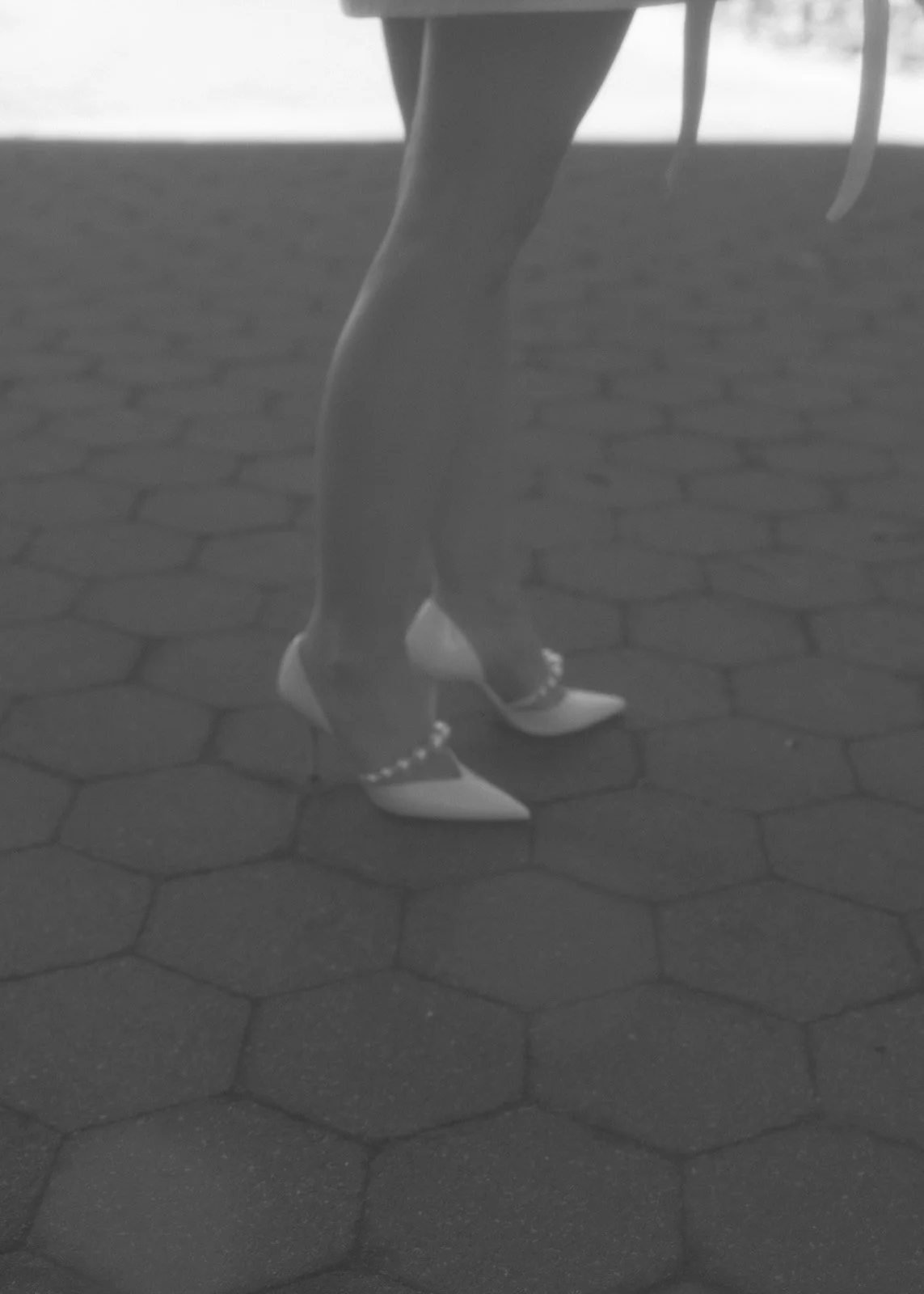
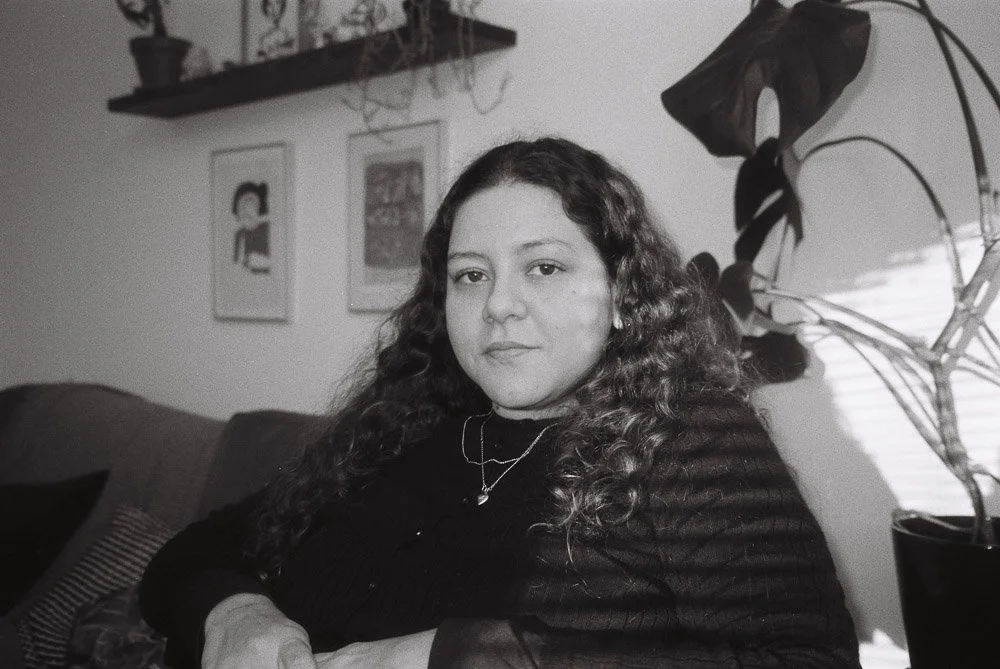
My grandmother, Mamaena, used to say it every time something was happening. Graba. She was always the one with a camera.
I didn't understand it then, growing up on the Caribbean coast of Colombia. But she was teaching me something without saying it: that paying attention to people is how you love them. That really seeing someone is how you tell them they matter.
Mamaena didn't finish elementary school. She studied every person she met, built a life from pure observation and gut instinct, and became one of the first female cattle ranchers on Colombia's north coast. She was magical. And she looked at me in a way that kept me alive. Gentle and unflinching, like she already knew who I was before I did.
She has Alzheimer's now. She's still here, but the memories are leaving. The woman who taught me to see is forgetting the things she saw. I think about that every time I pick up a camera. I think about it when I hand someone their negatives, something physical, something that doesn't need a password or a server to survive. Proof that this happened. Proof that these people loved each other.
That's the whole reason I do this.
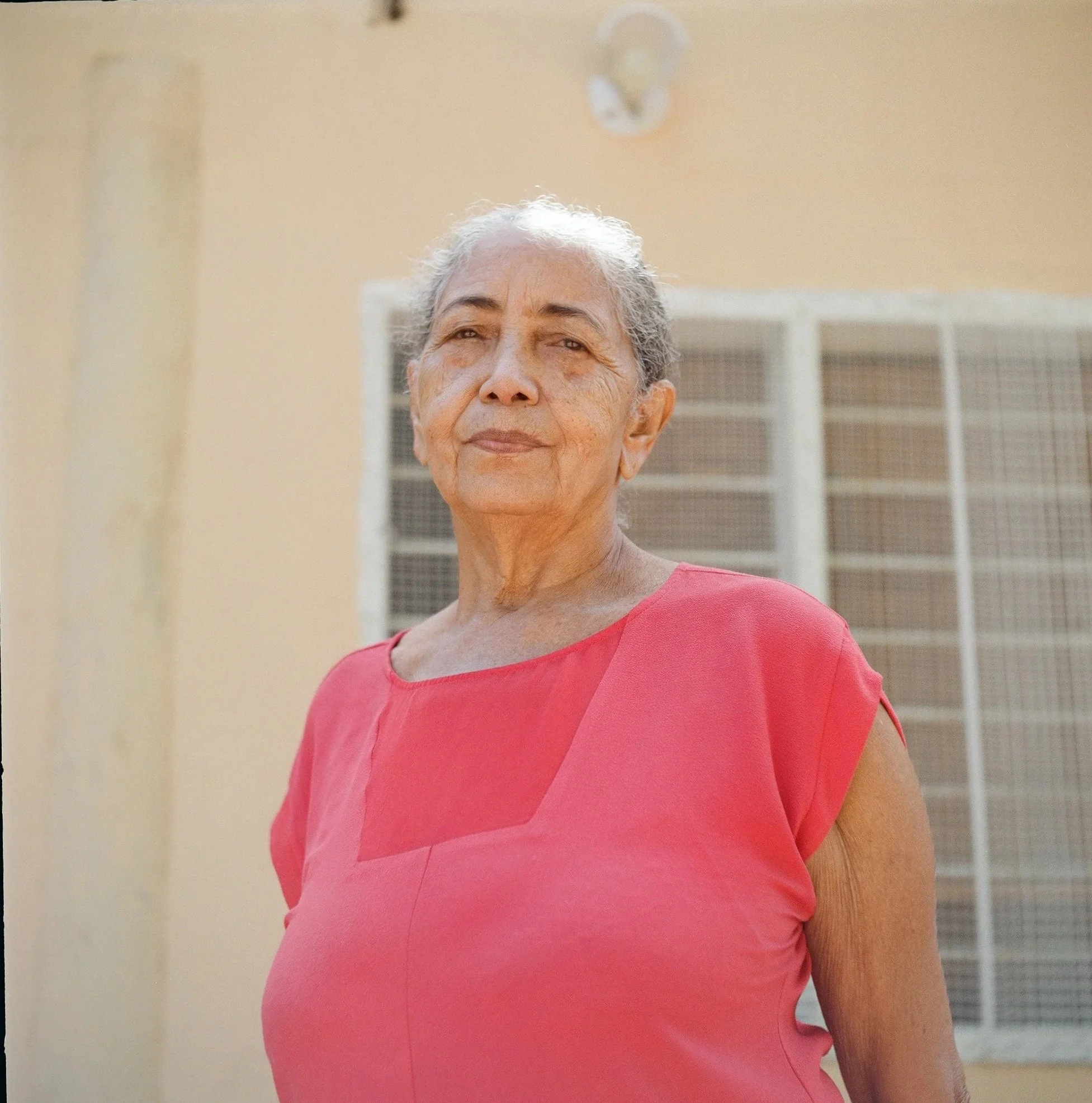
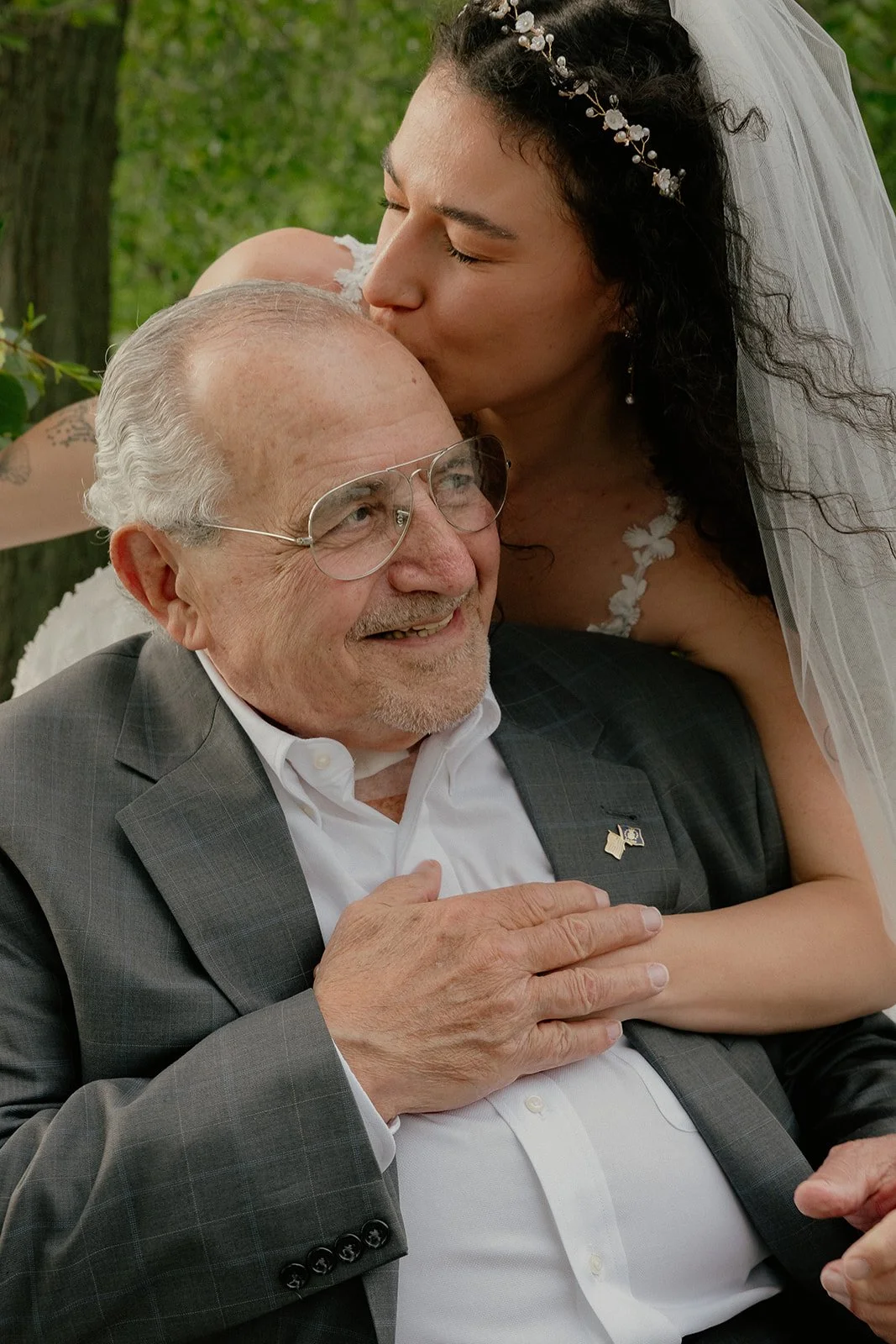
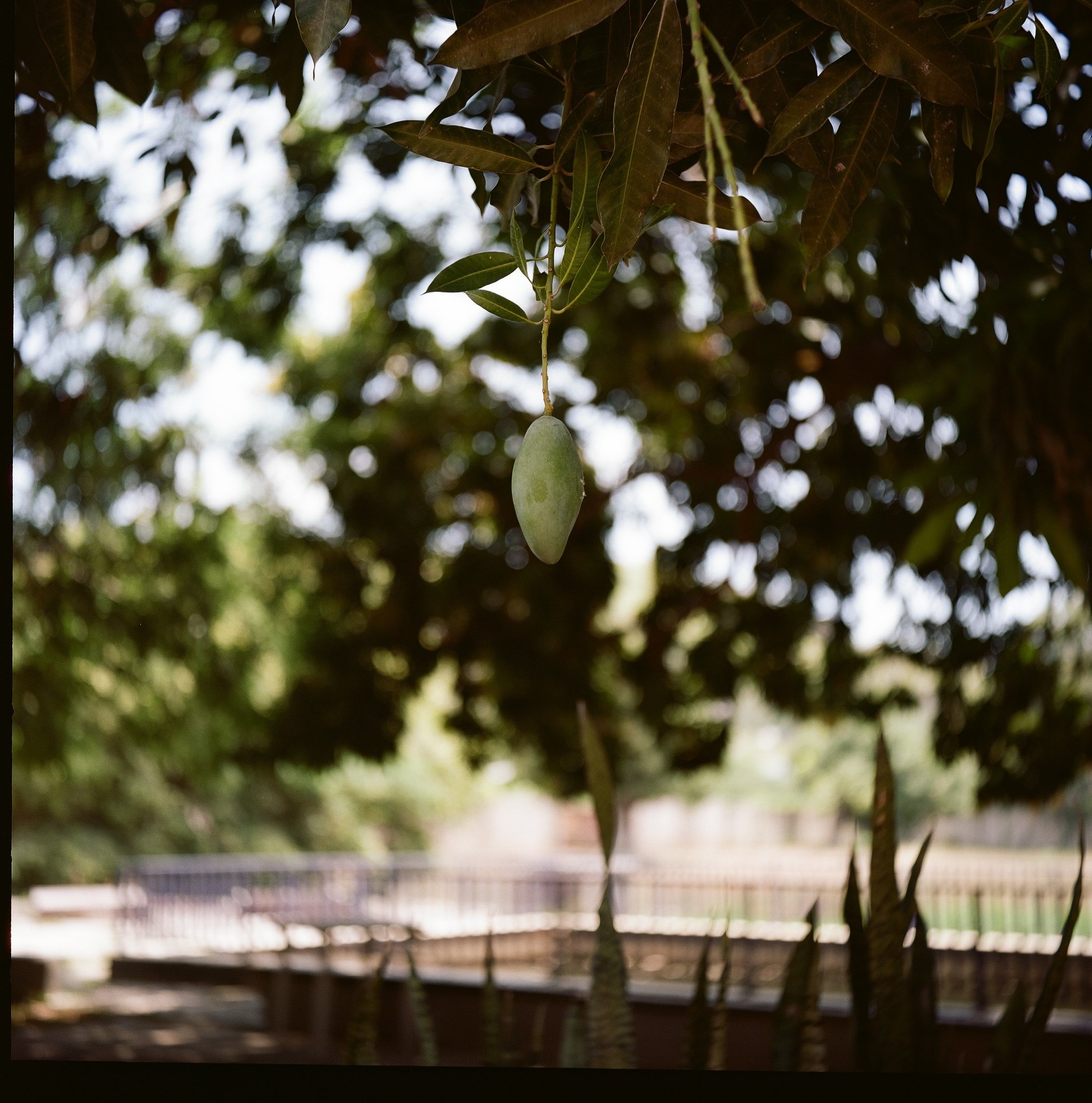
I didn't pick up a camera for years after Colombia. I went to fashion school, where a photography professor told me I had "un buen ojo" and got frustrated because she thought I wasn't using it. She was right. I wasn't ready yet.
But fashion taught me something I still carry. Humans have always decorated their bodies to speak without words. Civilizations, cultures, faiths, genders, rebellions, all of it communicated through fabric, silhouette, adornment. A white dress. A ring. A suit your grandmother picked out. Where do these rituals come from? Do they still mean what they meant? What's changing? Learning to read how people present themselves changed the way I see everything. Including weddings.
Life brought me back to the States in my twenties. Then I remembered Ricardo. Family friend, someone I knew from my grandfather's bakery back in Colombia. I texted him. We went to a concert. I never left his house after that night. We married three months later.
Ricardo is a musician. I started photographing his world first: concerts, rehearsals, late nights, the in-between. Phone first, then the camera he put in my hands. Photography became the first thing that felt like it was mine. Not borrowed, not inherited. Mine.
I photographed friends. I photographed strangers. I photographed one of my best friends in a session that is still one of my favorites I've ever made.
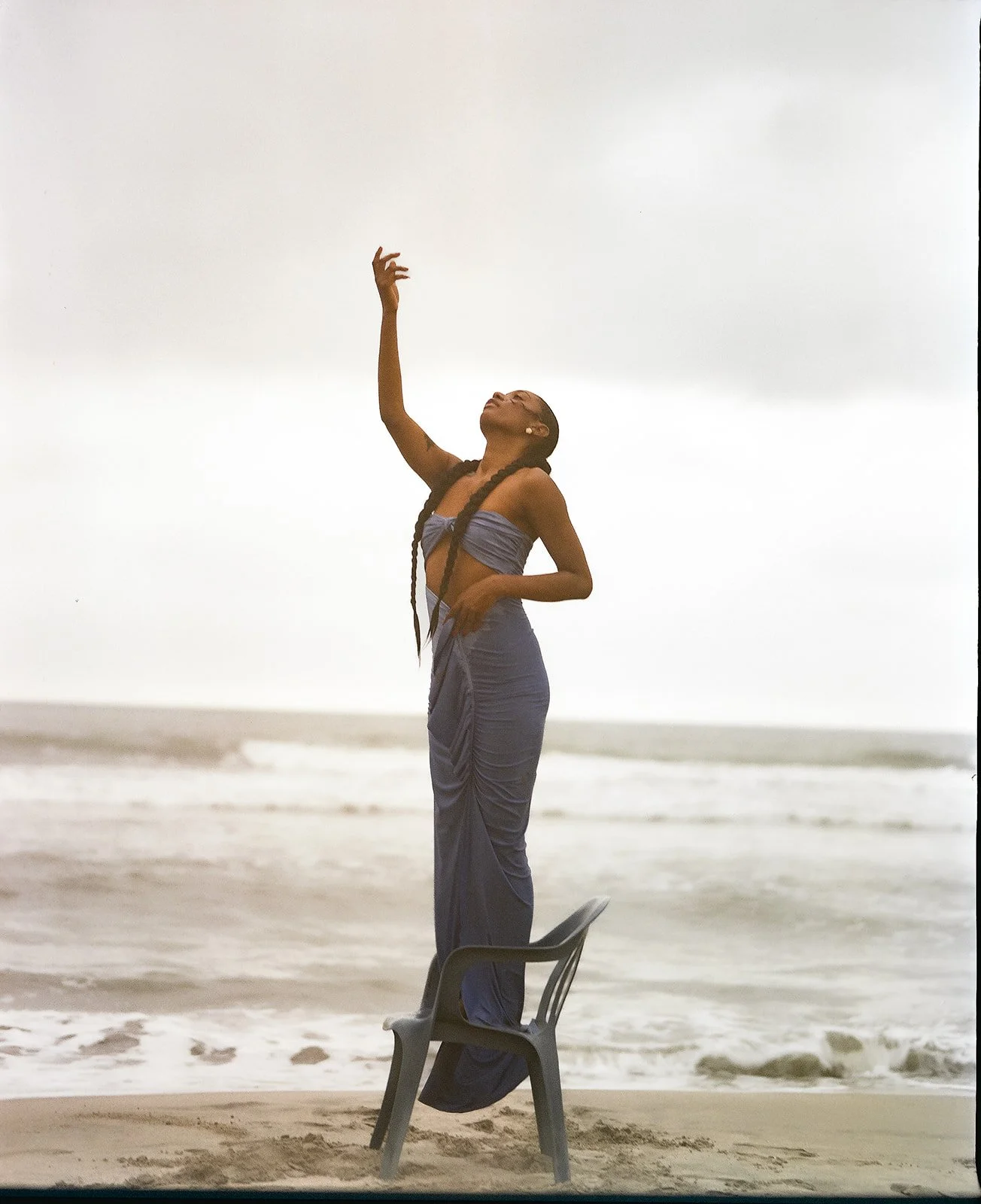
In 2018 I picked up a Canon AE-1. My first film camera. Then a Yashica A, which I still carry to every wedding.
Film changed everything. I fell in love with the process: loading the roll, choosing the stock based on the light and the skin and the feeling I want to create, waiting for the scans, holding a negative up to the light and seeing something I can actually touch.
When COVID hit, I spent the entire lockdown developing film, scanning, refining my setup, figuring out who I was behind a camera. Then a coworker asked me to photograph her Zoom wedding. Small and strange and beautiful. Standing in that room, watching two people choose each other in the middle of a pandemic, I understood what I was supposed to do.
That was six years and over a hundred weddings ago.
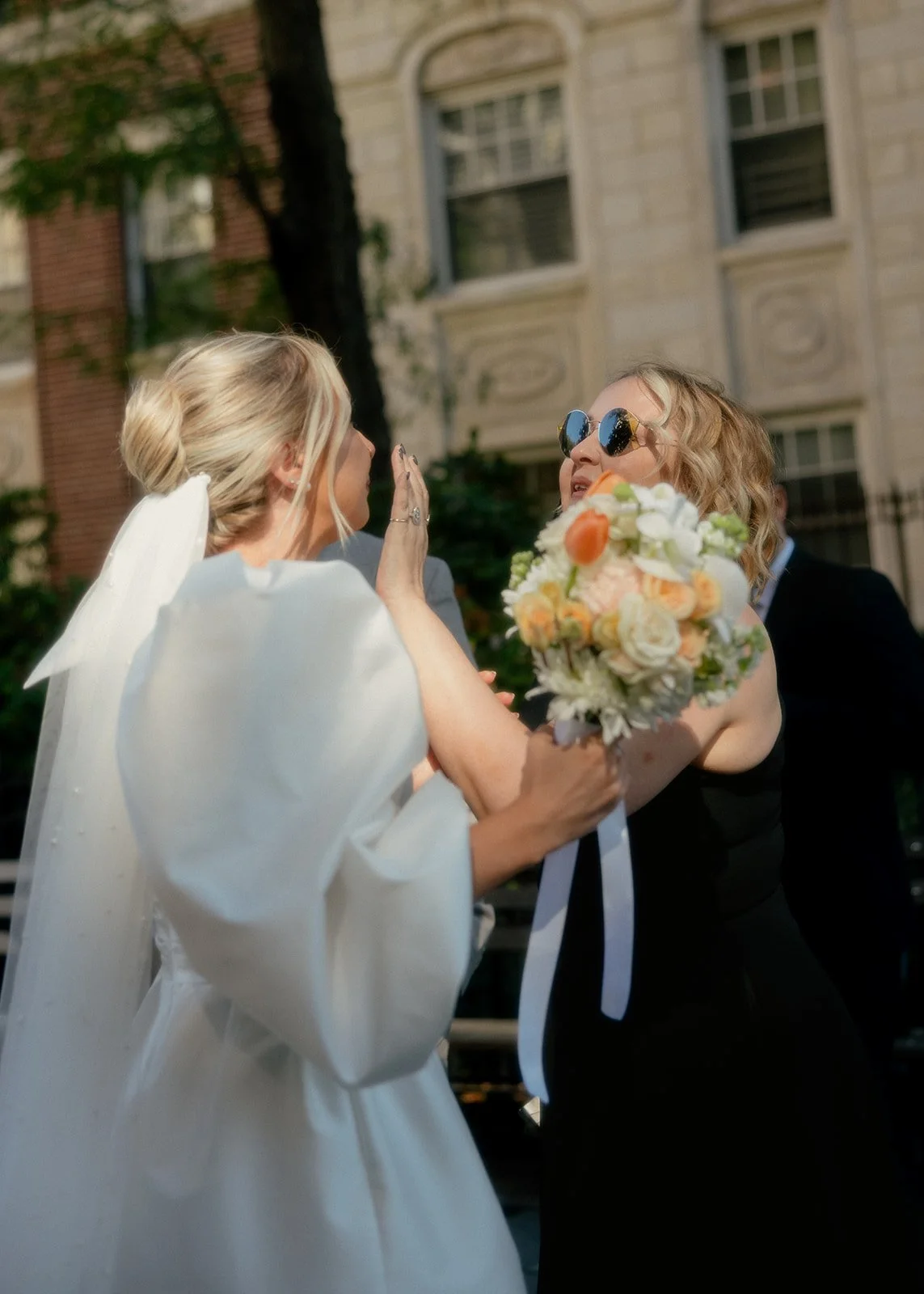
Weddings are not about me. They're not about my art. They're about the people in the room and the love they brought with them. I'm there to serve that. To make sure you remember what you had, not what you lacked. The love. The people. The fun. What actually matters.
I know what it means to be seen with care. I know what it does for a person when someone looks at them gently. My grandmother gave me that, and it kept me here. I try to give it to every couple I work with.
I also photograph portraits of women and queer people in NYC, work that feels more personal, more mine. Helping people inhabit their bodies and see themselves gently. That's the selfish part of what I do. Weddings are my service. Portraits are my mirror.
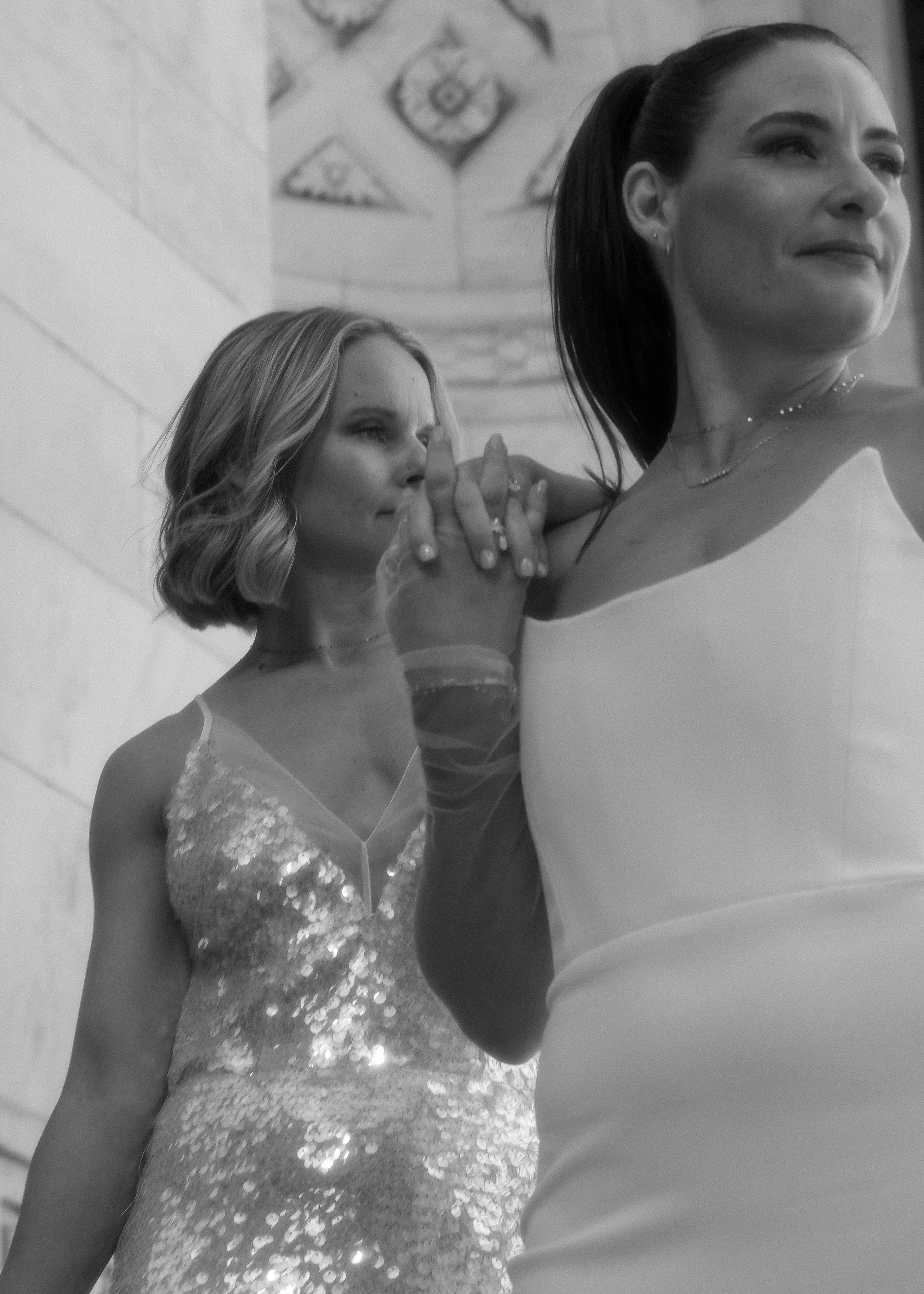
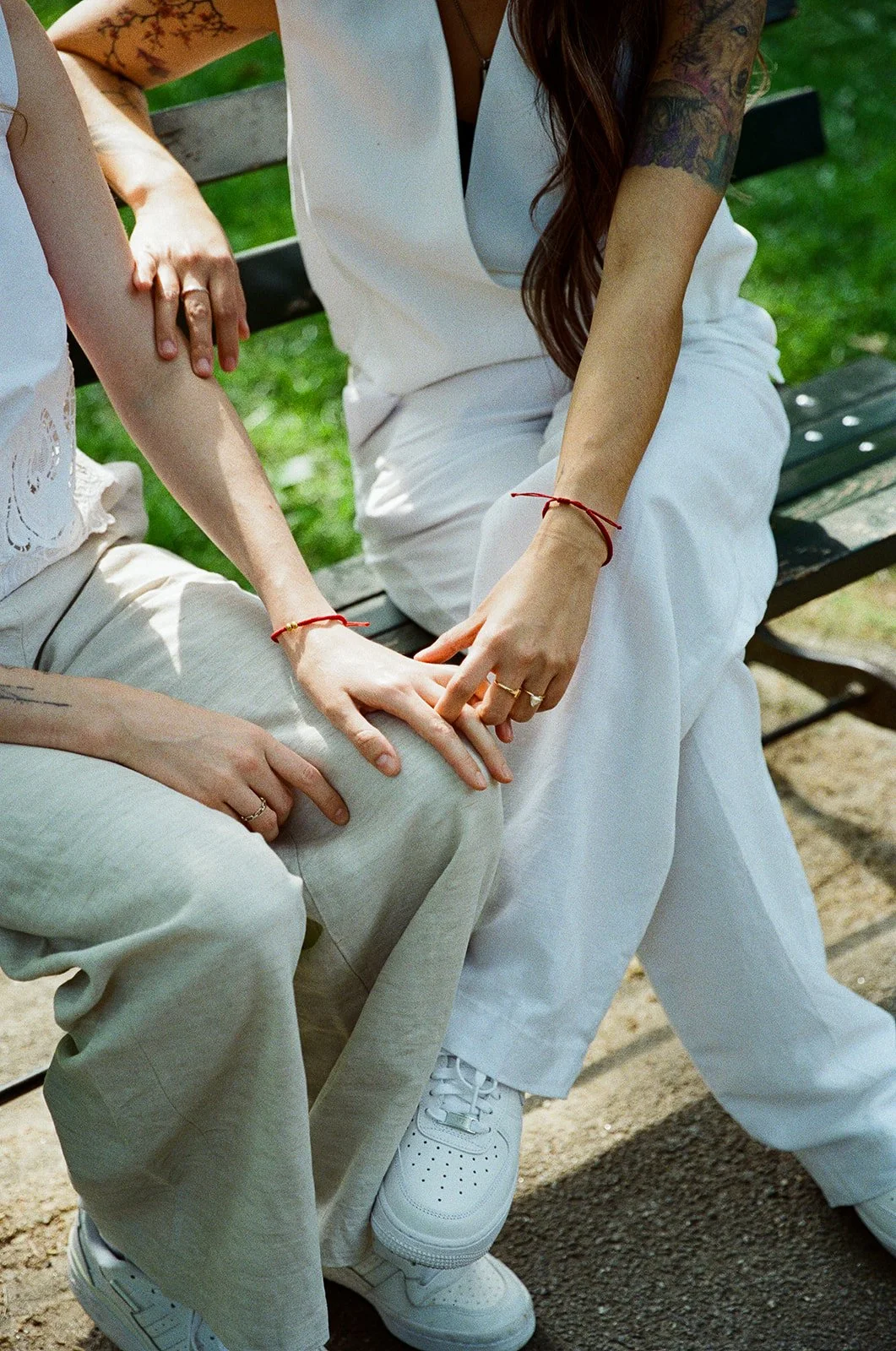
I photograph queer, multicultural, and non-traditional wedding celebrations. I'm proud to be an LGBTQ-friendly wedding photographer. I document love through a feminine gaze. I care about the people who raised you and the way your community shows up for you.
I believe in joy as resistance. In a world that profits from division, choosing to celebrate love fully and freely is one of the most radical things we can do. I believe every person deserves to exist fully, to love who they love, to gather their people, to make traditions their own or build new ones from scratch. Marriage has a complicated history. I love witnessing the people who take it and make it theirs.
If that resonates with you, we'll get along.
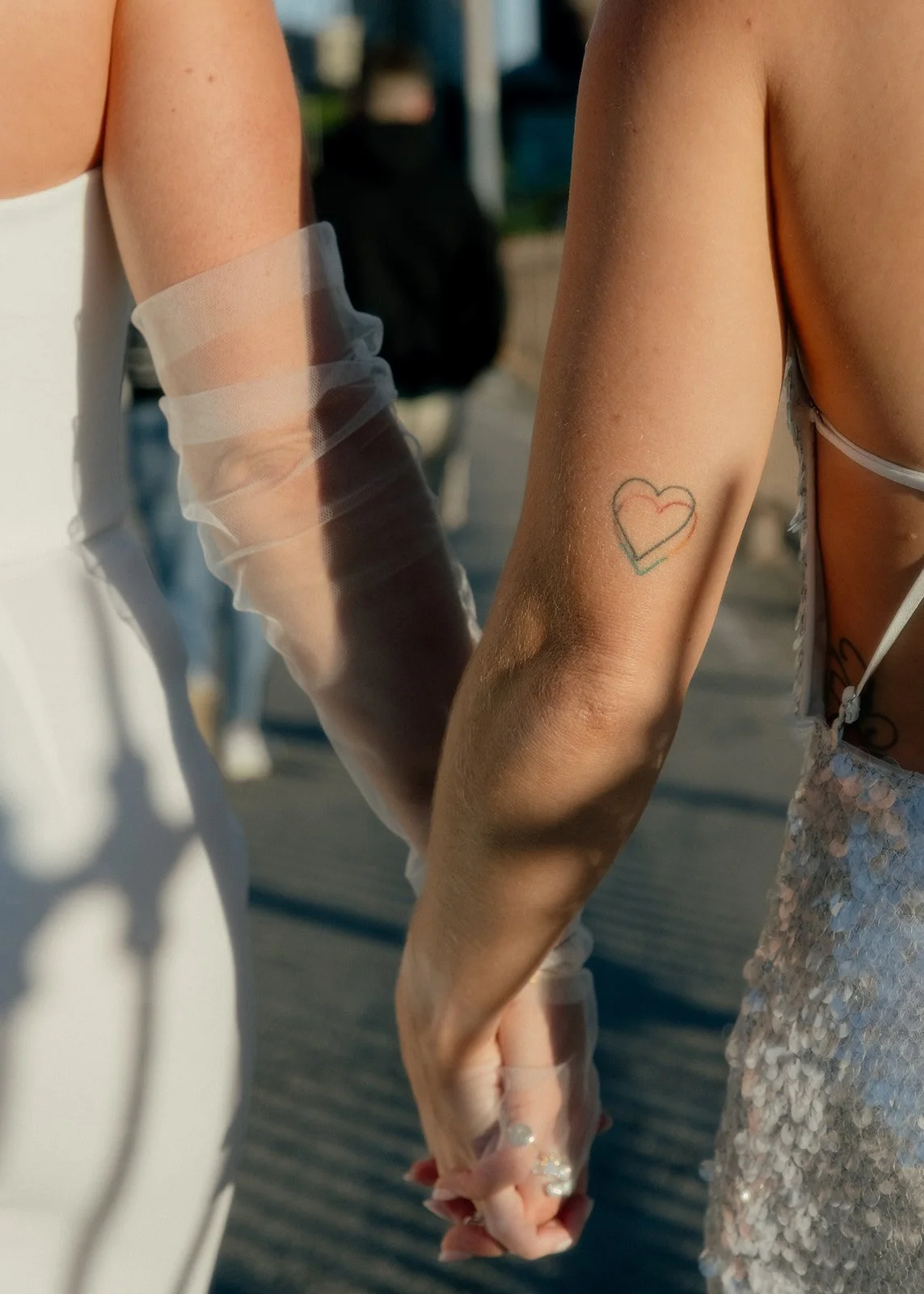
I develop and scan my own film when time allows, and I handmake crochet frames for every couple as part of their gift box. I have always worked with textiles, from hand-dyeing fabrics with plants and herbs to batik. Crochet is my newest love. The thread, the repetition, the slowness of making something with your hands for someone you will never meet, the person who inherits this object fifty years from now. It connects to everything I believe about memory.
I believe your memories deserve to survive generations. You should be able to hold them. Feel them. Pass them down the way we used to pass down our favorite records and films. That's why every couple receives their original film negatives, archival prints, and a handmade crochet frame. Something real. Something yours. It's what makes Burikitak different from any other wedding photography experience.
Your wedding is not a production. It's a gathering.
I'm there to witness it honestly.